International

How tech export controls affect companies and consumers

How Tech Export Regulations Shape Companies & Shoppers

Tech export controls are government rules that restrict the sale, transfer, or sharing of certain technologies across borders. They target items ranging from physical components and finished devices to software, source code, and technical know-how. Governments deploy these controls for national security, economic sanctions, and human rights reasons. The effects are felt across corporate strategies, supply chains, innovation ecosystems, and everyday consumer choices.How export controls functionExport controls operate through several familiar mechanisms:Product and technology classification: governments assign specific codes or categories, such as dual-use or military, that define whether an item needs formal licensing.Licensing and authorization: exporters are required to…
Read More
When carbon capture helps and when it distracts

Carbon Capture: Separating Fact from Fiction

Carbon capture is not a single technology or policy; it is a family of approaches that remove carbon dioxide from flue gases or directly from the air and then either store it permanently underground, use it in products, or inject it in ways that temporarily retain CO2. Whether carbon capture helps or distracts depends on purpose, timing, scale, governance, and economics. Below is a clear assessment of the contexts where carbon capture is a constructive tool and where it creates risks of delay, waste, or greenwashing.How carbon capture can helpDecarbonizing hard-to-abate industries: Cement, steel, chemicals, and some high-temperature industrial processes…

Read More
Why food prices rise even when harvests are strong

Food Security Challenges in Today’s World

Food security refers to a state in which everyone consistently enjoys physical and economic access to adequate, safe, and nourishing food. Although agricultural productivity has advanced and child mortality has fallen in certain regions over recent decades, global food security continues to be vulnerable. A combination of environmental, economic, political, social, and technological forces steadily weakens the availability, accessibility, utilization, and stability of food resources. This analysis outlines the primary drivers, supports them with examples and trend data, and points to practical strategies for reducing this vulnerability.Core drivers of fragilityConflict and instability: Armed conflict is the single largest driver of…
Read More
Why food prices rise even when harvests are strong

Why Are Food Prices Rising When Harvests Are Good?

Robust harvests typically suggest lower food prices, yet the connection between production volumes and what consumers pay is anything but straightforward. Retail prices emerge from the combined influence of physical supply, logistics, regulations, financial conditions, and overall market dynamics. Even an impressive yield measured in tonnes does not necessarily translate into plentiful, low‑cost food for households. The following points outline the key mechanisms that can push food prices upward despite seemingly strong aggregate harvests.Main driversMismatch between global supply and exportable supply: A nation may register an abundant harvest yet ship only limited volumes abroad when domestic consumption, state purchasing programs,…
Read More
Iranians confront a post-Khamenei reality with relief, disbelief and anxiety

A Post-Khamenei Iran: Hope, Doubt, and Uncertainty

For the first time in decades, Iranians woke to a country without Ayatollah Ali Khamenei as supreme leader, following his death in coordinated US-Israeli strikes. The nation now confronts a period of deep uncertainty.Mixed reactions across the countryThe news of Khamenei’s death has triggered a broad array of reactions throughout Iran, where residents in the capital and other major cities voiced restrained optimism, seeing the conclusion of his decades-long leadership as a moment that might reshape the country’s future. In several districts, impromptu celebrations broke out as crowds honked car horns, waved garments, and even pulled down monuments linked to…
Read More
What safeguards exist in modern nuclear power

Understanding Safety Protocols in Modern Nuclear Power Facilities

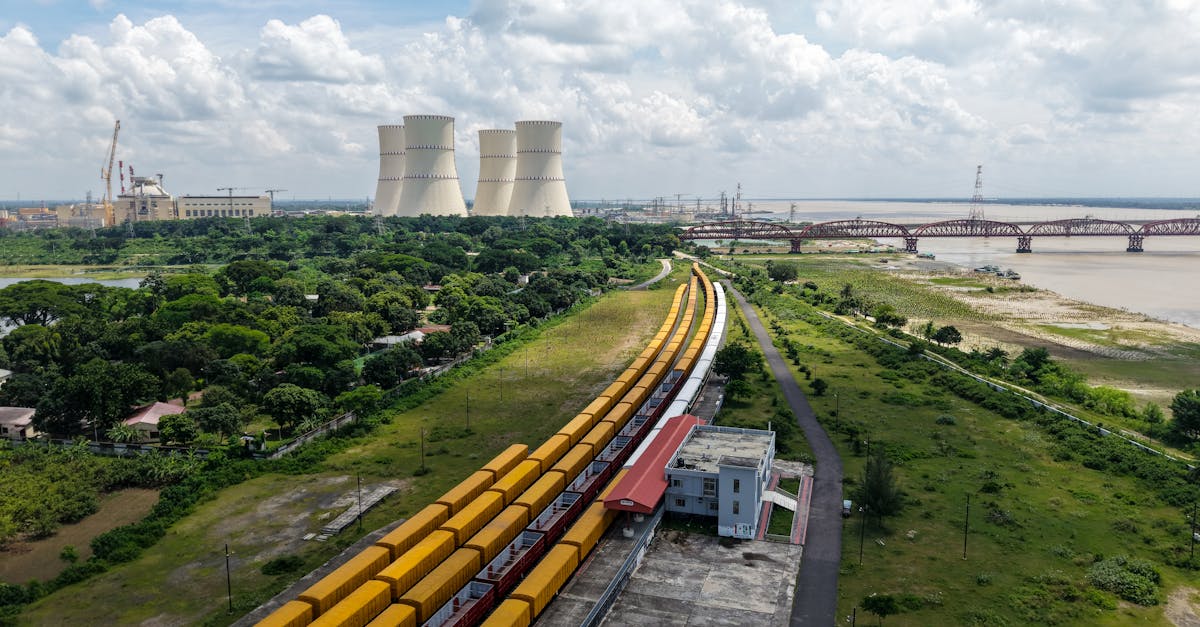
Modern nuclear power relies on a multilayered framework of technical, organizational, regulatory, and institutional protections built to avert accidents, curb their impact when they happen, guard against hostile interference, and ensure nuclear materials are not redirected for weaponization. These protective measures extend throughout the entire life span of a plant, covering site selection, system design, construction, daily operations, emergency preparedness, waste handling, and eventual decommissioning.Fundamental tenets: layered protection supported by successive physical obstaclesThe guiding principle follows a defense-in-depth approach, employing several independent protective layers to ensure that neither a single malfunction nor a human mistake results in a catastrophic release.…
Read More
How shared river agreements prevent conflict

Shared River Agreements: Fostering Peace and Cooperation

Rivers often flow across political boundaries in ways that defy modern territorial concepts. More than 150 nations rely on transboundary river basins, and over 260 international river and lake systems cut across national borders. In regions where water is scarce or unevenly spread, competition may intensify and lead to diplomatic strain or even military displays. In contrast, well-crafted shared river agreements provide cooperative frameworks that transform potential conflict zones into stable, jointly managed resources. This article outlines how these agreements help avert disputes, offering examples, data, and practical insights.Core risks of unmanaged transboundary riversWhen parties draw on a shared river…
Read More
The dilemmas of content moderation online

Free Speech vs. Safety: The Content Moderation Battle

Online content moderation lies where technology, law, business pressures, and human values converge, requiring platforms to shield users from harm while still honoring free expression, operate under countless legal frameworks, and issue rapid judgments on millions or even billions of posts. These conditions create enduring challenges: determining what to take down, what to flag, how to apply rules uniformly, and who holds the authority to make those choices.Core dilemmas explainedSafety versus free expression. Strict enforcement can curb harms tied to harassment, hate, and misinformation, yet it may also sweep up valid political conversations, satire, or voices from marginalized groups. More…
Read More
Who controls data and why that equals power

Data Dominion: Who Commands the Digital Realm?

Data is far from neutral or merely raw; it functions as a strategic resource. The party that gathers, stores, interprets, and oversees extensive, high‑quality datasets secures economic leverage, political sway, and operational authority. That concentrated ability to anticipate behavior, influence markets, guide information flows, and execute large‑scale decisions is what ultimately transforms data into power.Primary stakeholders responsible for managing dataBig technology platforms: Companies spanning global search, social networks, cloud ecosystems, and ecommerce services accumulate vast volumes of behavioral, transactional, and location-based information derived from billions of users and activities.Governments and regulators: States gather identity, taxation, health, telecom, and surveillance records,…
Read More