International

Why recycling alone won’t solve plastic pollution

The Recycling Myth: Addressing Plastic Pollution Effectively

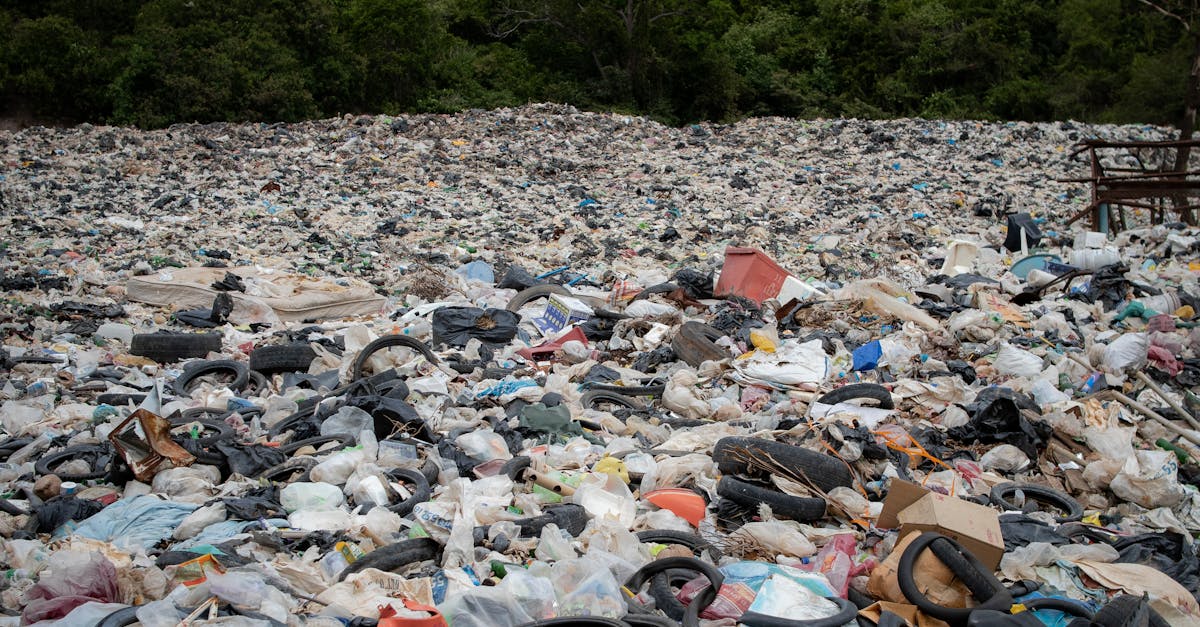
Plastic recycling is often depicted as a catch‑all solution to plastic pollution, but the reality is considerably more complex. Although recycling provides significant benefits, it cannot by itself eradicate plastic waste because of technical, economic, behavioral, and systemic limitations. This article examines these constraints, offers relevant evidence and illustrations, and underscores complementary strategies that must accompany recycling to create lasting change.Today’s scale: how production, waste, and the real impact of recycling unfoldGlobal plastic production has grown to well over 350 million metric tons per year in recent years. A landmark analysis of historical production and waste found that, of all…
Read More
What happens when countries restrict food exports

What happens when countries restrict food exports

When a country restricts exports of staple foods or key agricultural inputs, the effects ripple across markets, households, governments, and international relations. Export restrictions include outright bans, export licensing, higher export taxes, quantity quotas, and administrative delays. These measures are often intended to protect domestic consumers or stabilize local prices, but they also create consequences that extend beyond national borders and beyond the short term.Mechanisms and immediate market effectsReduction in global supply: When one or several exporters curb their outgoing shipments, the overall volume available worldwide declines, and for commodities with tight supply-demand balances, even slight cutbacks can push international…
Read More
Why biodiversity is an economic security issue

The Economic Case for Biodiversity Protection

Biodiversity — the variety of life across genes, species and ecosystems — is not an environmental abstract reserved for scientists and conservationists. It underpins the goods, services and resilience that modern economies depend on. When biodiversity declines, the effects cascade through supply chains, public budgets, corporate balance sheets and national stability. Treating biodiversity as an economic security issue reframes it from a conservation priority to a fundamental component of national and global economic resilience.The connection between biodiversity and economic stabilityProvisioning services and supply chains. Biodiversity supplies food, timber, medicines, fibres and genetic material. Agricultural yields, fisheries output and pharmaceutical pipelines…
Read More
What critical minerals are and why they’re contested

Critical Minerals: Essential Resources and Global Tensions

Critical minerals are naturally occurring elements and compounds that modern economies depend on for manufacturing, energy transition, and defense, but that face concentrated or fragile supply chains. Governments and analysts typically assess criticality by weighing two dimensions: the mineral’s economic importance for key technologies and the risk that supply will be disrupted. That combination — high demand and high vulnerability — is what makes a mineral “critical.”Why they matter nowAs the world accelerates toward electrification, renewable power, digital networks and sophisticated defense technologies, the need for specific minerals has surged. Lithium, cobalt, nickel and graphite form the backbone of modern…
Read More
How tech export controls affect companies and consumers

How Tech Export Regulations Shape Companies & Shoppers

Tech export controls are government rules that restrict the sale, transfer, or sharing of certain technologies across borders. They target items ranging from physical components and finished devices to software, source code, and technical know-how. Governments deploy these controls for national security, economic sanctions, and human rights reasons. The effects are felt across corporate strategies, supply chains, innovation ecosystems, and everyday consumer choices.How export controls functionExport controls operate through several familiar mechanisms:Product and technology classification: governments assign specific codes or categories, such as dual-use or military, that define whether an item needs formal licensing.Licensing and authorization: exporters are required to…
Read More
When carbon capture helps and when it distracts

Carbon Capture: Separating Fact from Fiction

Carbon capture is not a single technology or policy; it is a family of approaches that remove carbon dioxide from flue gases or directly from the air and then either store it permanently underground, use it in products, or inject it in ways that temporarily retain CO2. Whether carbon capture helps or distracts depends on purpose, timing, scale, governance, and economics. Below is a clear assessment of the contexts where carbon capture is a constructive tool and where it creates risks of delay, waste, or greenwashing.How carbon capture can helpDecarbonizing hard-to-abate industries: Cement, steel, chemicals, and some high-temperature industrial processes…
Read More
Why food prices rise even when harvests are strong

Food Security Challenges in Today’s World

Food security refers to a state in which everyone consistently enjoys physical and economic access to adequate, safe, and nourishing food. Although agricultural productivity has advanced and child mortality has fallen in certain regions over recent decades, global food security continues to be vulnerable. A combination of environmental, economic, political, social, and technological forces steadily weakens the availability, accessibility, utilization, and stability of food resources. This analysis outlines the primary drivers, supports them with examples and trend data, and points to practical strategies for reducing this vulnerability.Core drivers of fragilityConflict and instability: Armed conflict is the single largest driver of…
Read More
Why food prices rise even when harvests are strong

Why Are Food Prices Rising When Harvests Are Good?

Robust harvests typically suggest lower food prices, yet the connection between production volumes and what consumers pay is anything but straightforward. Retail prices emerge from the combined influence of physical supply, logistics, regulations, financial conditions, and overall market dynamics. Even an impressive yield measured in tonnes does not necessarily translate into plentiful, low‑cost food for households. The following points outline the key mechanisms that can push food prices upward despite seemingly strong aggregate harvests.Main driversMismatch between global supply and exportable supply: A nation may register an abundant harvest yet ship only limited volumes abroad when domestic consumption, state purchasing programs,…
Read More
Iranians confront a post-Khamenei reality with relief, disbelief and anxiety

A Post-Khamenei Iran: Hope, Doubt, and Uncertainty

For the first time in decades, Iranians woke to a country without Ayatollah Ali Khamenei as supreme leader, following his death in coordinated US-Israeli strikes. The nation now confronts a period of deep uncertainty.Mixed reactions across the countryThe news of Khamenei’s death has triggered a broad array of reactions throughout Iran, where residents in the capital and other major cities voiced restrained optimism, seeing the conclusion of his decades-long leadership as a moment that might reshape the country’s future. In several districts, impromptu celebrations broke out as crowds honked car horns, waved garments, and even pulled down monuments linked to…
Read More