Investments and Business

Wall Street sank on Iran war fears. Now it’s surging. Here’s why

Decoding Wall Street: Why It Surged After Iran War Fears Faded

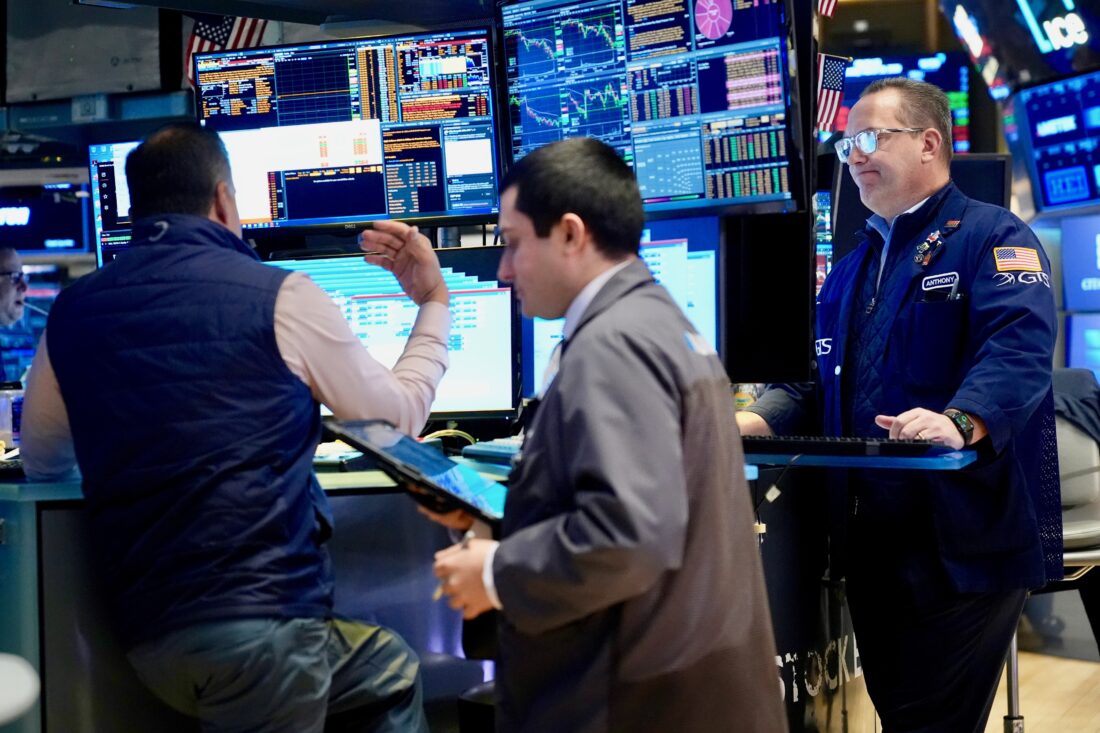
Markets have rebounded sharply after recent volatility, with major indices recovering losses linked to geopolitical tensions. Investor optimism, however, continues to coexist with lingering uncertainty surrounding global events.Over the past two weeks, US equity markets have mounted a strong rebound, undoing the earlier pullback that emerged after tensions escalated between the United States and Iran, and this renewed momentum has lifted major benchmarks like the S&P 500 and Nasdaq to levels that not only recover prior losses but in some instances drive them close to fresh peaks, signaling a marked shift from the recently prevailing sense of caution.The S&P 500,…

Read More
Allbirds shares soar 600% as it pivots from footwear to AI

Allbirds Shares Skyrocket 600% with AI Shift

A once-iconic footwear brand is undergoing a dramatic transformation after years of declining performance. The company is leaving behind its sustainability-driven identity to reposition itself in the fast-growing artificial intelligence sector.In a surprising shift that stunned investors and industry watchers alike, Allbirds has unveiled a broad transformation of its business strategy, bringing its original mission to a close and opening a new era focused on artificial intelligence infrastructure. This decision follows years of financial headwinds and waning market traction, marking a clear departure from the company’s former role as an innovator in environmentally mindful fashion.The market responded at once and…
Read More
What deal structures help buyers manage valuation uncertainty?

Optimizing Deal Structures for Buyer Valuation Uncertainty

Valuation uncertainty emerges when buyers and sellers hold contrasting expectations about a company’s future trajectory, risk characteristics, or prevailing market dynamics. This often occurs in acquisitions tied to rapidly scaling businesses, new technologies, cyclical sectors, or unstable economic settings. Buyers are concerned about paying too much if forecasts do not unfold as anticipated, whereas sellers worry about missing potential value if the company ultimately exceeds projections. To narrow this divide, deal structures are crafted to allocate risk over time instead of concentrating every unknown factor into a single upfront price.Earn-Outs: Connecting the Purchase Price to Future OutcomesEarn-outs represent one of…
Read More
How do investors evaluate platform risk when a company depends on one ecosystem?

Evaluating Platform Risk: A Guide for Investors in Single-Ecosystem Businesses

When a company depends heavily on a single ecosystem—such as a dominant app store, cloud provider, marketplace, operating system, or advertising network—investors scrutinize the associated platform risk. Platform risk refers to the exposure created when a third party controls critical distribution, data access, pricing rules, or technical standards that materially affect a company’s performance. Investors evaluate this risk to understand earnings durability, bargaining power, and long-term strategic resilience.Why Investors Should Pay Attention to Platform DependenceA unified ecosystem can spur expansion through broad reach, credibility, and robust infrastructure, yet it may also centralize vulnerabilities. When a platform adjusts its rules, algorithms,…
Read More
Kingston, in Jamaica: How entrepreneurs build credit history when collateral is limited

Jamaican Entrepreneurs: Credit History Solutions Despite Limited Collateral

Kingston serves as Jamaica’s commercial core, shaped by informal trading routes, inventive microenterprises, dynamic hospitality and service industries, and a growing fintech ecosystem. Many Kingston entrepreneurs do not possess conventional collateral like land or formal property titles, yet they still require credit to expand. Establishing a reliable credit record without substantial fixed assets can be achieved through formal business registration, documented cash flow, alternative security arrangements, strong lender relationships, and consistent financial discipline. The following guidance outlines practical actions, illustrative examples, expected timelines, and the institutional options accessible in Kingston.Why collateral is often limited and why credit history mattersMany small…
Read More
What are the main hurdles to mainstream adoption of tokenized securities?

Exploring the Hurdles to Widespread Tokenized Securities Adoption

Tokenized securities refer to familiar financial instruments including equities, bonds, real estate interests, or investment funds that are digitally represented on a blockchain. Each token reflects ownership rights and economic entitlements comparable to traditional securities, while offering potential advantages such as quicker settlement, reduced expenses, divisible ownership, and wider investor reach. Although banks, asset managers, and exchanges continue experimenting with these models, broader adoption has stayed modest because of persistent structural and systemic challenges.Ambiguous Regulatory Frameworks and Market FragmentationOne of the most significant obstacles is the lack of clear, harmonized regulation.Inconsistent legal classification: Different jurisdictions may categorize tokenized securities as…
Read More
When carbon capture helps and when it distracts

Corporate Strategy in the Age of Carbon Markets

Carbon markets have moved from a niche policy instrument to a central force shaping how corporations plan, invest, and compete. As governments expand emissions trading systems and voluntary carbon markets mature, companies are increasingly treating carbon as a financial variable rather than a purely environmental concern. This shift is influencing strategic priorities, investment decisions, risk management, and long-term value creation across sectors.Exploring How Carbon Markets Operate Within Corporate SettingsCarbon markets put a price on greenhouse gas emissions, either through mandatory compliance systems or voluntary mechanisms. The two main types are:Compliance carbon markets, where regulators set emissions caps and require companies…
Read More
Asunción, in Paraguay: How SMEs improve cash flow with supply-chain finance

How Asunción SMEs Optimize Cash Flow with Supply Chain Finance

Small and medium-sized enterprises (SMEs) in Asuncion face familiar cash-flow pressures: long payment terms from larger buyers, limited access to affordable credit, and seasonal demand swings. Supply-chain finance (SCF) is a set of working-capital solutions that shifts financing toward the credit profile of stronger buyers or automates early-payment options for suppliers. For many SMEs in Asuncion, SCF can convert receivables into predictable cash, reduce reliance on expensive short-term loans, and improve supplier-buyer relationships while lowering the overall cost of capital for the chain.Local context: Asuncion’s SME ecosystem and financing gapsAsuncion is Paraguay’s economic and administrative center. SMEs in manufacturing, agribusiness…
Read More
What signals indicate a business has durable pricing power?

What Are the Hallmarks of Durable Business Pricing Power?

Durable pricing power is a company’s sustained ability to raise prices or maintain margins without materially harming demand, customer loyalty, or competitive position. It is not about one-off price increases during inflationary spikes; it is about consistency across business cycles. Identifying this trait helps investors, operators, and strategists distinguish resilient businesses from those dependent on favorable conditions.Sustained Margin Steadiness or GrowthConsistently steady or widening gross and operating margins maintained across extended periods, even through recessions or sudden cost increases, offer one of the most reliable indicators. Stable gross margins maintained even as input expenses rise show the company can effectively…
Read More